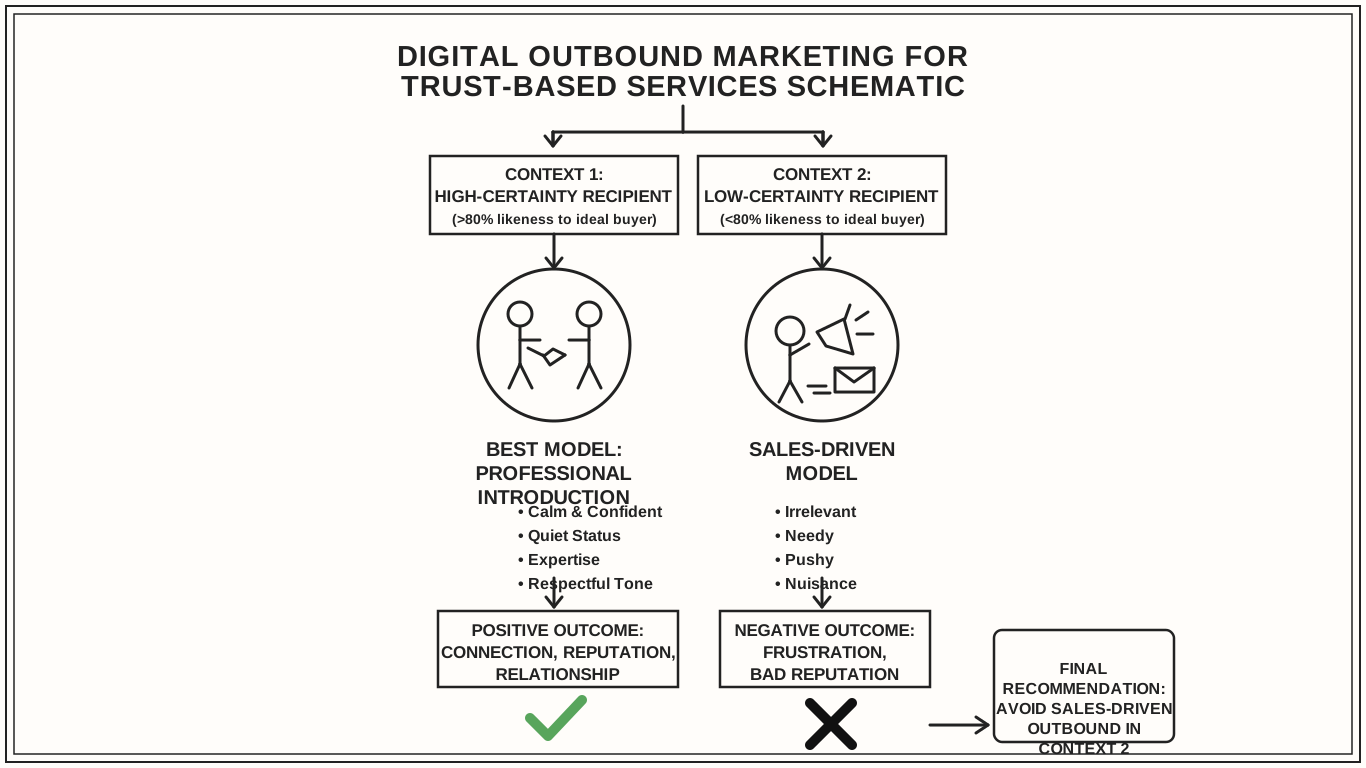
Digital outbound marketing hasn’t been around for all that long. But outbound as a general thing, intentionally connecting with someone you don’t already have a relationship with, is not new at all. Letters, telegrams, requests for introduction, letters of reference, and so on. There are numerous existing patterns we might draw from and apply to digital outbound marketing. Which model is the best one for people selling trust-based services?
Context matters. There are two basic contexts at play.
- Context 1: You are at least 80% sure the person you are reaching out to buys something like what you sell.
- Context 2: You are less than 80% sure the person you are reaching out to buys something like what you sell.
Digital outbound gets used in Context 2 a lot, and it’s why most of us cringe at the idea of outbound marketing. If you have a business listing on LinkedIn or own a domain, you have almost certainly gotten irrelevant, needy, pushy, sales-driven outbound. It’s a nuisance. The people doing it haven’t done the work needed to achieve near-certainty that you need or buy the thing they are pushing, so we feel negative emotions when we receive this kind of stuff, and we remember negative emotions more easily than positive ones. Many of us develop this heuristic: outbound sucks. And yes, sales-led outbound done in Context 2 usually does suck.
Context 1 is different, though. In Context 1, you or OpportunityLeads, if you’re using that service, has done the work needed to achieve near certainty that the person you’re reaching out to needs or buys the thing you are reaching out about. I’d bet you have received a fair bit of Context 1 outbound marketing, otherwise known as relevant outbound marketing, and it doesn’t come to mind as easily as the irrelevant Context 2 stuff because the relevant stuff has fewer or no negative emotions attached to it, especially if the tone of the relevant stuff was also professional, polite, and not pushy.
Within Context 1, the best model is:
- One professional introducing themselves to another.
My favorite definition of a professional is someone who does a good job even on a bad day. But when I talk about a professional introducing themselves to another professional, I’m trying to capture the feeling of how someone with relatively high status and a reputation they want to safeguard would carry themselves and communicate. The aura of this person flows from quiet and calm but strong confidence, and that confidence comes from knowing that they have expertise that is economically valuable and works reliably.
The best template I’ve seen comes from my friend Blair Enns, in this article. Read the whole thing. And here’s the template:
Hi [Firstname];
I’m a business development advisor to creative firms worldwide. I’ve helped hundreds of advertising agencies on five continents win more business at higher margin while breaking from the convention of giving their thinking away for free in a pitch.
I see you are a member of [network].
Feel free to say no if you don’t see a fit but… might I be of help to you?
-Blair
Do you feel the aura I’m talking about? There’s also this article from Blair, which includes this example:
“I’m calling because we work with a small number of new clients every year and I’m in charge of finding the right fit. Our services aren’t for everyone so I won’t be offended if you don’t see a fit here, but we do have a lot of experience building innovative programs for companies like yours, including at least one of your competitors, so I wanted to make the introduction and see if this is an area you’re interested in exploring for a couple of minutes. Are you?”
This is framed as a phone call, but you can easily imagine how it would work almost verbatim as an email. Similar aura.
The best model for outbound marketing, in a context where you are nearly certain the recipient buys the kind of thing you are selling, is one professional introducing themselves to another.
So what if you’re forced by circumstance into Context 2? For example, you’re wanting to introduce a radically new service you’re pretty sure no one has ever bought before. Or you’re trying to create a new category so you can own that new category.1 Reputation and brand are so integral to trust-based services and, even if you don’t have much of a reputation now, you should always be thinking about how current actions affect the future, including your future reputation. Aside from advertising, which is a form of outbound marketing, there’s no good model for marketing trust-based services in Context 2. Don’t do it. Find another way. Or consider OpportunityList, which uses brand-marketing dynamics more suitable to Context 2.
What if you need more business now, now, NOW? In that situation, you can still operate in Context 1, but you will be tempted to depart from the one-professional-introducing-themselves model and move toward a sales-driven model. Again, you risk scorching your reputation. Don’t do it. Find another way.
1 Probably don’t even try this category-of-one thing unless you are unusually well supplied with charisma. Charisma is my catch-all term for folks who can, to some degree or another, bend reality to their will and reality likes it.